

Pediatric fracture AI tested prospectively in Leipzig
In the pediatric surgical emergency department of University Hospital Leipzig, in Germany, a prospective study tested Milvue's fracture detection AI during out-of-hours service.
Written by Dr Alexandre Parpaleix, MD-PhD, CEO and co-founder of Milvue
How was Milvue's AI tested in a pediatric emergency department?
Researchers at University Hospital Leipzig tested Milvue's fracture detection AI in a prospective study, which was published in July 2026 in BMC Emergency Medicine and is free to read.1 It ran from April to September 2025 in the pediatric surgical emergency department of this tertiary referral hospital and included children and adolescents who had an X-ray of a limb for a suspected injury during out-of-hours service, from evening to morning.2
At those hours, it was junior residents in pediatric surgery who read the X-rays and decided on treatment, and they could call the on-call consultant whenever they wished.3 A schedule fixed in advance gave them AI support every second day.4
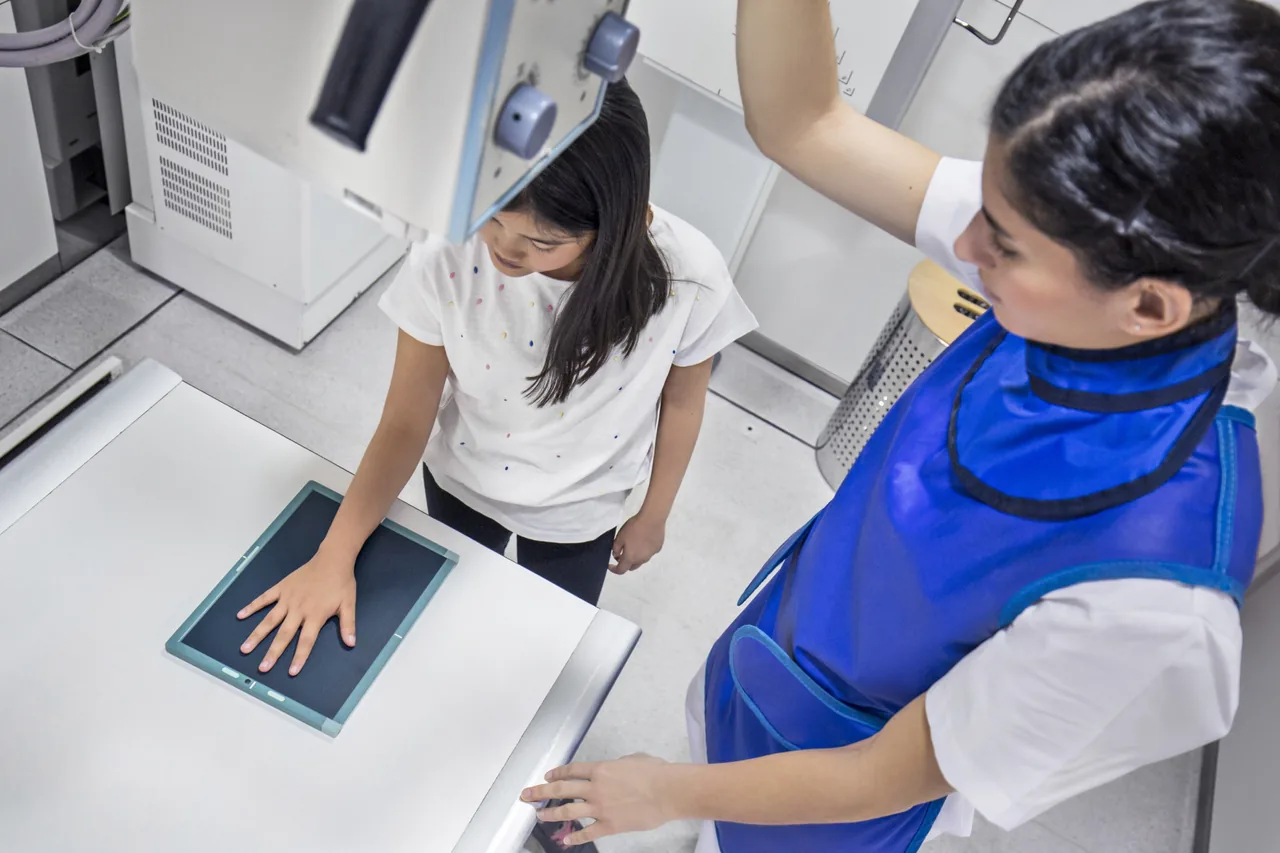
How did the AI fit into the emergency workflow?
The AI tested was the Milvue Suite, in which the TechCare Alert module detects fractures. It ran on a server inside the hospital, without cloud computing, and the radiographs were sent to it and to the hospital's PACS at the same time.4 Each radiograph was classified as definite, possible or no fracture, and the annotated images that went back to the PACS in real time appeared there next to the originals.4
Physicians kept full autonomy over diagnosis and treatment, and the CE-marked system was used strictly as a decision support tool.4 The next day, pediatric radiologists reviewed every examination at the daily multidisciplinary case conference.3 The reference diagnosis was the consensus reading of senior pediatric radiologists, supplemented by follow-up imaging when available.5
What did the study measure?
The study compared days with and without the AI. Its primary endpoint was a diagnosis corrected the next day, when the pediatric radiologists' review led to recalling the child. It also followed changes in treatment, time spent in the emergency department, calls to the consultant and the physicians' confidence in their diagnosis, and it assessed the accuracy of the AI against the reference diagnosis.6 While they waited, patients or their parents answered a short questionnaire on AI in medical imaging.6 The results are in the article, which is free to read.1
What other studies have tested Milvue's AI in children?
The University Children's Hospital Zurich published its evaluation of AI fracture detection in children, Milvue included, in Pediatric Radiology in 2026.7 Milvue's AI was also evaluated at Bicêtre Hospital, AP-HP, on elbow fractures and joint effusions in children.8
Notes
- Oliver Johannes Deffaa, Johanna Pape, Dominik Schlösser, Franz Wolfgang Hirsch, Martin Lacher, Maciej Rosolowski, Daniel Gräfe, "Artificial intelligence for pediatric fracture detection: impact on diagnostic revisions and patient recall rates in a tertiary emergency setting," BMC Emergency Medicine, vol. 26, article 204, published online July 29, 2026, open access, CC BY 4.0.
- Deffaa et al., "Artificial intelligence for pediatric fracture detection," BMC Emergency Medicine, 2026, Materials and methods, Cohort.
- Deffaa et al., "Artificial intelligence for pediatric fracture detection," BMC Emergency Medicine, 2026, Materials and methods, Clinical setting.
- Deffaa et al., "Artificial intelligence for pediatric fracture detection," BMC Emergency Medicine, 2026, Materials and methods, Integration of artificial intelligence.
- Deffaa et al., "Artificial intelligence for pediatric fracture detection," BMC Emergency Medicine, 2026, Materials and methods, Integration of artificial intelligence, on the reference diagnosis.
- Deffaa et al., "Artificial intelligence for pediatric fracture detection," BMC Emergency Medicine, 2026, Materials and methods, Endpoints.
- Irmhild Altmann-Schneider, Léa S. Geiger, Christian J. Kellenberger, Fraser Callaghan, Michelle Seiler, "Multivendor comparison study of artificial intelligence software for automated fracture detection in paediatric patients," Pediatric Radiology, vol. 56, pp. 2067-2077, 2026; summary on milvue.com.
- Michel Dupuis, Léo Delbos, Alexandra Rouquette, Catherine Adamsbaum, Raphaël Veil, "External validation of an artificial intelligence solution for the detection of elbow fractures and joint effusions in children," Diagnostic and Interventional Imaging, vol. 105, no. 3, pp. 104-109, 2024, version evaluated Milvue Suite V1; summary on milvue.com.
Antoine Béclère: radiology before electricity
In 1897, Antoine Béclère brought X-rays into a Paris hospital that had no electricity. A portrait of a pioneer of French radiology.
ReadEvaluating fracture-detection AI: the questions to ask
Independent studies, results by region, patient age, clearance, integration, testing on your own cases: a checklist to compare fracture-detection software.
ReadRadiology voice dictation: how to choose speech recognition
Accuracy measured on real dictations, words versus commands, report templates, languages, trial: the criteria that matter when choosing radiology voice dictation.
Read