Ranking
No. 1
pediatric fractures
Tech
By technologyCare
By clinical workflowOne suite, two ways to read it. Tech by technology type, Care by clinical benefit.
See the Milvue SuiteA child's bone is not a small adult bone. The Milvue Suite is validated with no age limit in Europe, to detect pediatric fractures with the sensitivity they demand.
In short. Milvue detects fractures in children on radiographs, with no age limit in Europe (Class IIa) and from birth in the United States (FDA, TechCare Trauma). In an independent study from the University Children's Hospital Zurich (Pediatric Radiology, 2025, 3,013 children aged 2 to 17), its fracture-detection sensitivity is 90.0% on the lower leg and 94.7% on the forearm.
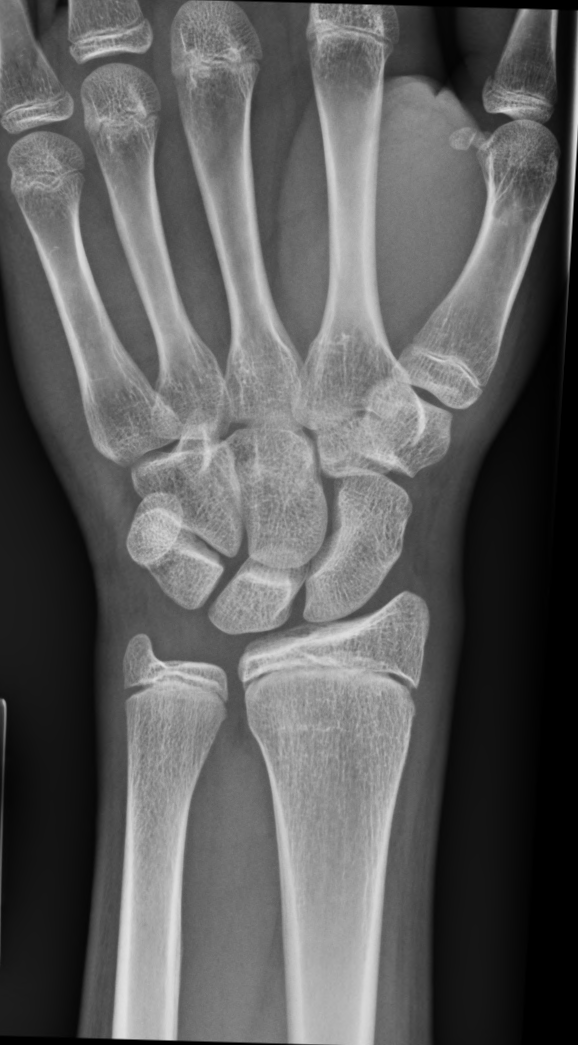
Growth plates, thin cortices, atypical presentations: pediatric detection is trained and validated specifically, with no age limit in Europe.
Nothing to change at the reading station: the solution slots into your existing flow.
Standard radiography, no specific protocol.
Models validated on children's bone, all ages.
Fractures localized and scored, for a fast decision.
With the Milvue solution deployed for six months, diagnostic errors drop and diagnosis speeds up for our experienced pediatric radiologists, while enabling precise orthopedic measurements.
CE-marked medical device, Class IIa, developed by Milvue. Native integration, protected data.
| Modalities | Standard radiography (CR / DX) |
|---|---|
| Population | Pediatric, no age limit (EU) |
| Regions | Skeleton, trauma |
| Output | Localized detection + confidence |
| Integration | Native RIS / PACS |
| Device | CE marked, class IIa * |
Regulatory detail:
Page updated on October 3, 2026.
Yes. The Milvue Suite's fracture detection is CE marked with no age limit in Europe; in the United States, TechCare Trauma is FDA cleared for fractures from birth; in Canada, SmartTrauma is licensed by Health Canada with no age limit. In the reader study of the FDA submission, the AI raised reader sensitivity in children by 20%.
An independent multivendor study from the University Children's Hospital Zurich (Altmann-Schneider et al., Pediatric Radiology, 2025) on 3,013 children aged 2 to 17: sensitivity and specificity of 90.0% and 98.8% on the lower leg, 94.7% and 96.4% on the forearm, 91.6% and 82.4% on the elbow. An external validation on elbow fractures and joint effusions in children was published in Diagnostic and Interventional Imaging in 2023.
Yes. In the Zurich study, the anterior fat pad sign was detected with 84.5% sensitivity and 98.1% specificity; the posterior fat pad, with 82.3% and 99.1%.