

Antoine Béclère: radiology before electricity
In 1897, Antoine Béclère brought X-rays into a Paris hospital that had no electricity. A portrait of a pioneer of French radiology.
Written by Dr Alexandre Parpaleix, MD-PhD, CEO and co-founder of Milvue
Who was Antoine Béclère?
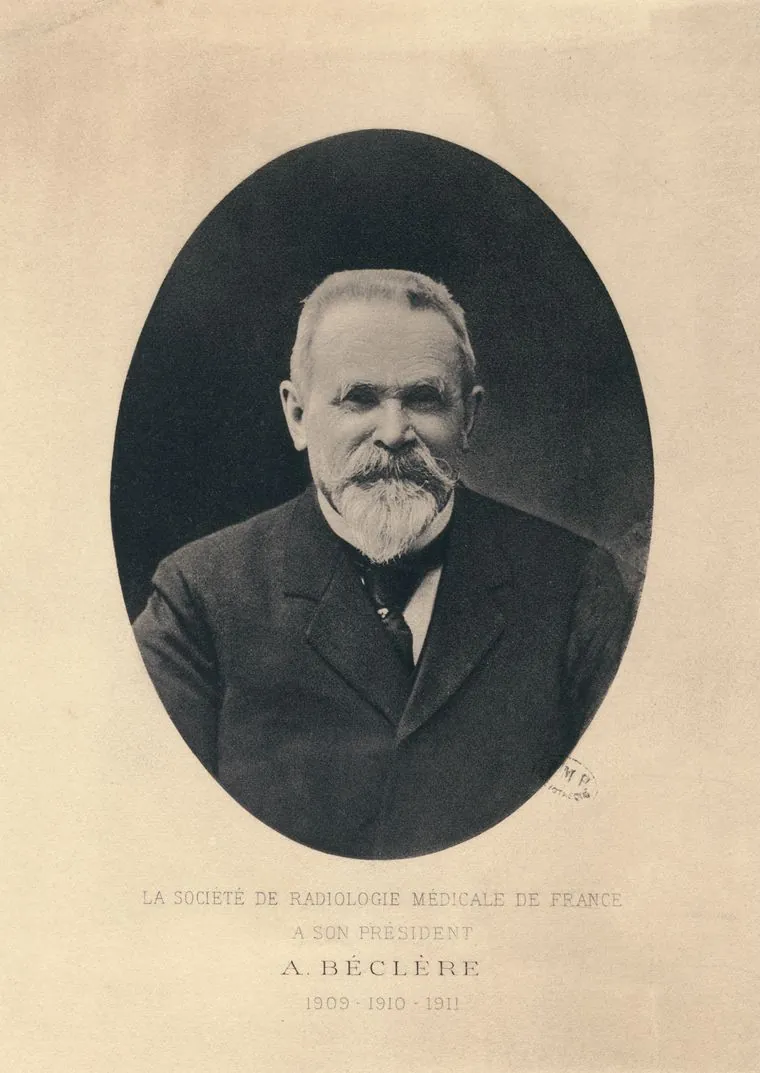
Antoine Béclère (1856-1939) gave his name to an AP-HP hospital in Clamart, near Paris.1,2,3 By 1908, his peers already saw him as the father of French radiology.4 The son of a Paris doctor, he passed the competitive examination for Paris hospital physicians in 1893 and made his name in pediatrics.1,5
In 1896, at the office of Paul Oudin, a friend from his years as an intern, he attended a fluoroscopy demonstration.5 A servant stood behind the screen, and Béclère watched her heart beat.5 At the apex of one lung, an opacity caught his eye; the woman, he learned, had a history of hemoptysis.5 He would later describe this path as "the way to the Promised Land."5
How do you practice radiology in a hospital without electricity?
From January 1, 1897, Béclère ran the general medicine department of Tenon, a hospital in Paris.5,6 Röntgen had announced his discovery of X-rays a year earlier.1 The administration would not pay, so Béclère bought the equipment himself.6 That left the power supply, as he later wrote to his former student Iser Solomon: "How was I to manage, in this hospital without any electricity?"6
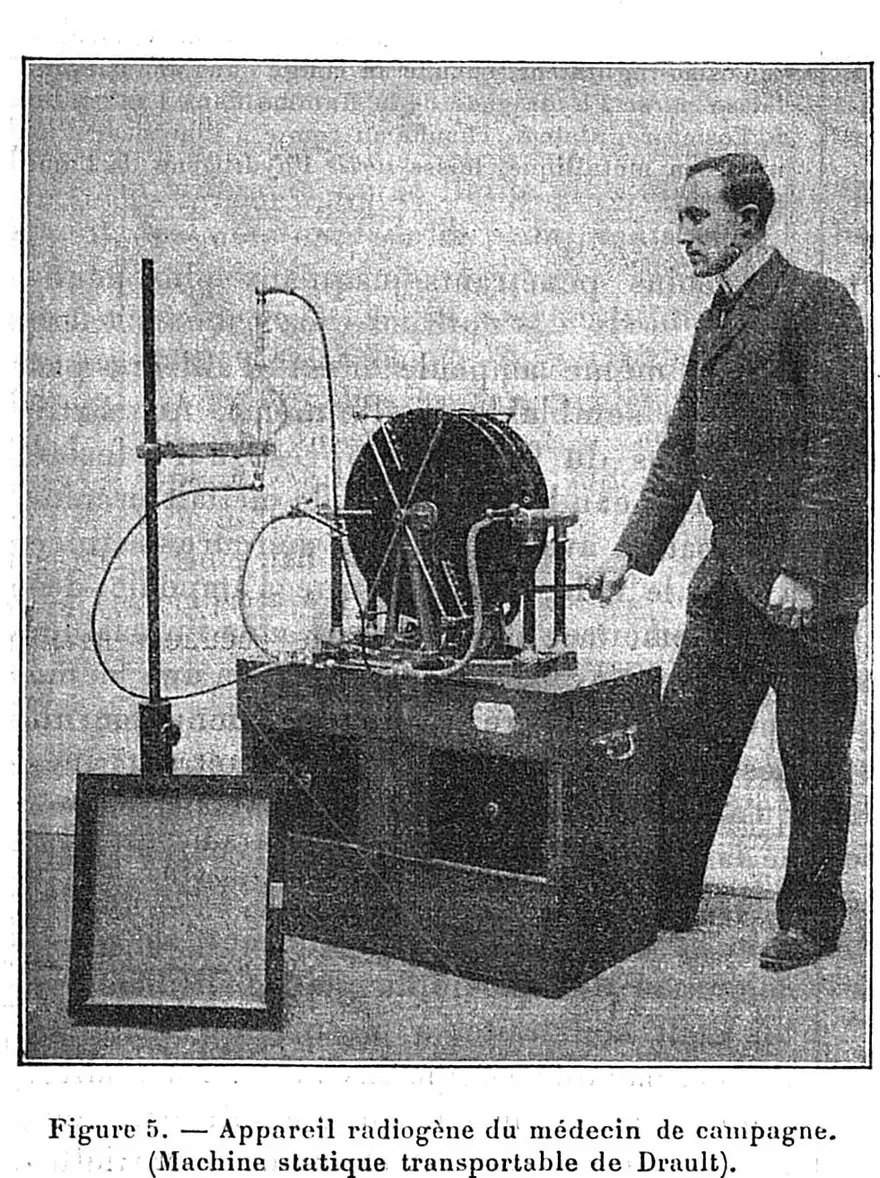
His answer was an electrostatic machine built by Drault: four 45 cm plates turned by a hand crank.6 It delivered no more than two tenths of a milliampere, too little for a radiograph.6 So Béclère kept to fluoroscopy, and even that meant a long wait in the dark until the eyes adjusted.6 Then accumulators took over, and they had to be sent into town for recharging.6
Fluoroscopy or radiography: how did Béclère examine his patients?
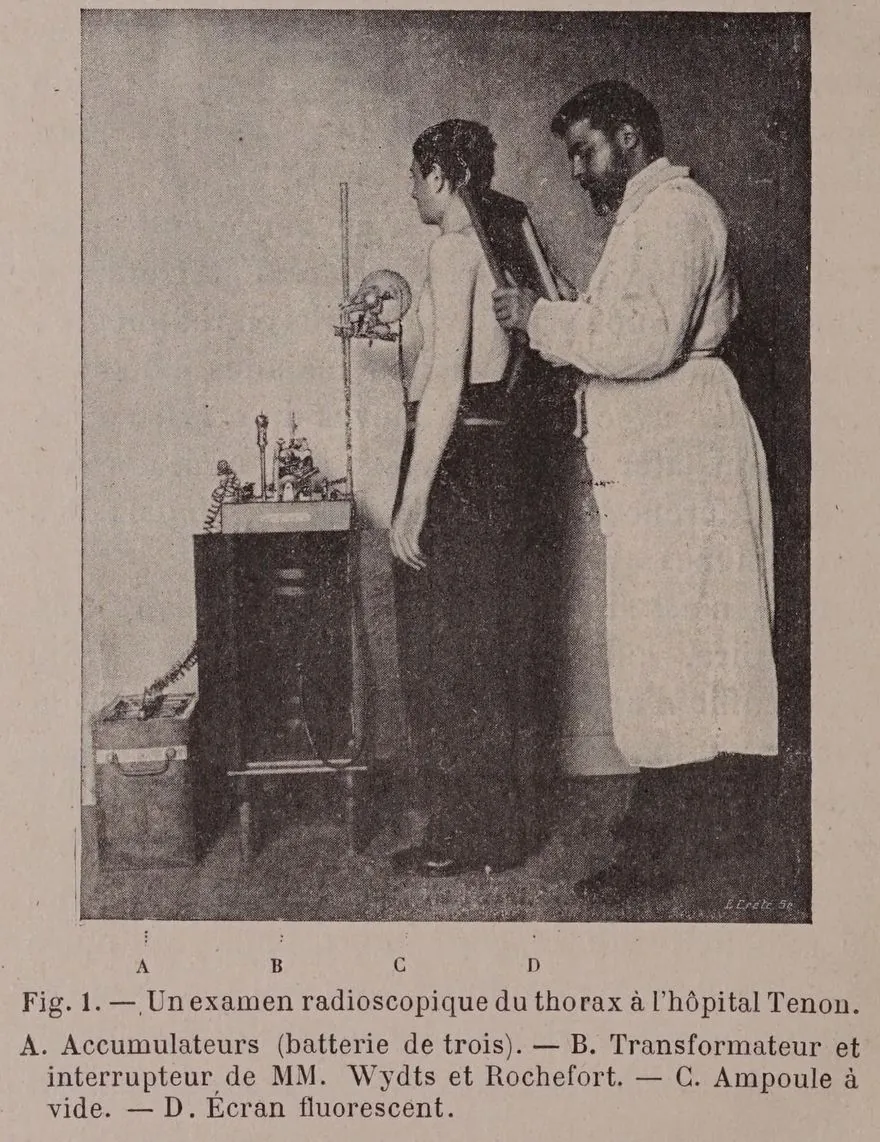
Day to day, Béclère examined his patients by fluoroscopy and traced anything abnormal onto transparent paper laid against the screen.6 Tuberculosis was a particular concern: he devoted a book to it in 1899.7
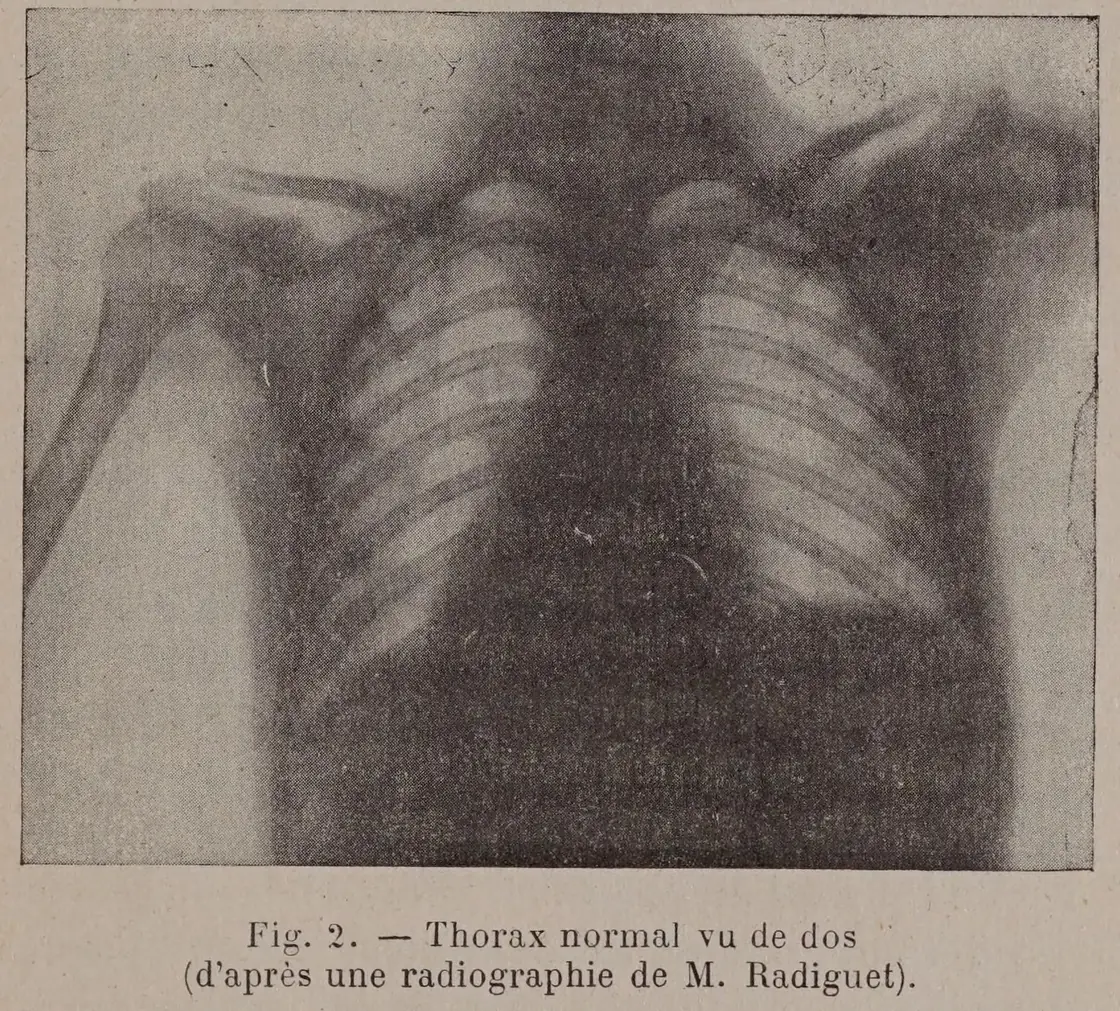
Radiographs on glass plates were rare.6,8 On June 11, 1897, Béclère showed the Société médicale des hôpitaux de Paris a case of pyopneumothorax on a plate that had taken a 30-minute exposure.6 Nor could the hospital develop the plates: his wife Cécile did it at home, in a room fitted out as a darkroom.6,8 The radiology historian Guy Pallardy calls her "the first radiographer."8
Where did Antoine Béclère teach radiology?
Béclère held that "to know a subject well, you have to teach it."9 He gave his first lessons at Tenon in 1897, which the French Society of Radiology regards as the first teaching of radiology.4,8 A weekly course opened on Sunday, November 6, 1898.8 For the practical sessions, the Assistance Publique, which ran the Paris hospitals, set three conditions: Béclère paid the costs, students stayed out of the wards, and they practiced on one another, never on a patient.8
His young cousin Henri Béclère, one of his students, remembered classes in a former chapel whose roof leaked so badly that at times you had "to bring umbrellas."8 Some colleagues mocked his "bubbles and playthings."9 He went on to train hundreds of doctors, from France and abroad.9
How did Béclère find power at Saint-Antoine Hospital?
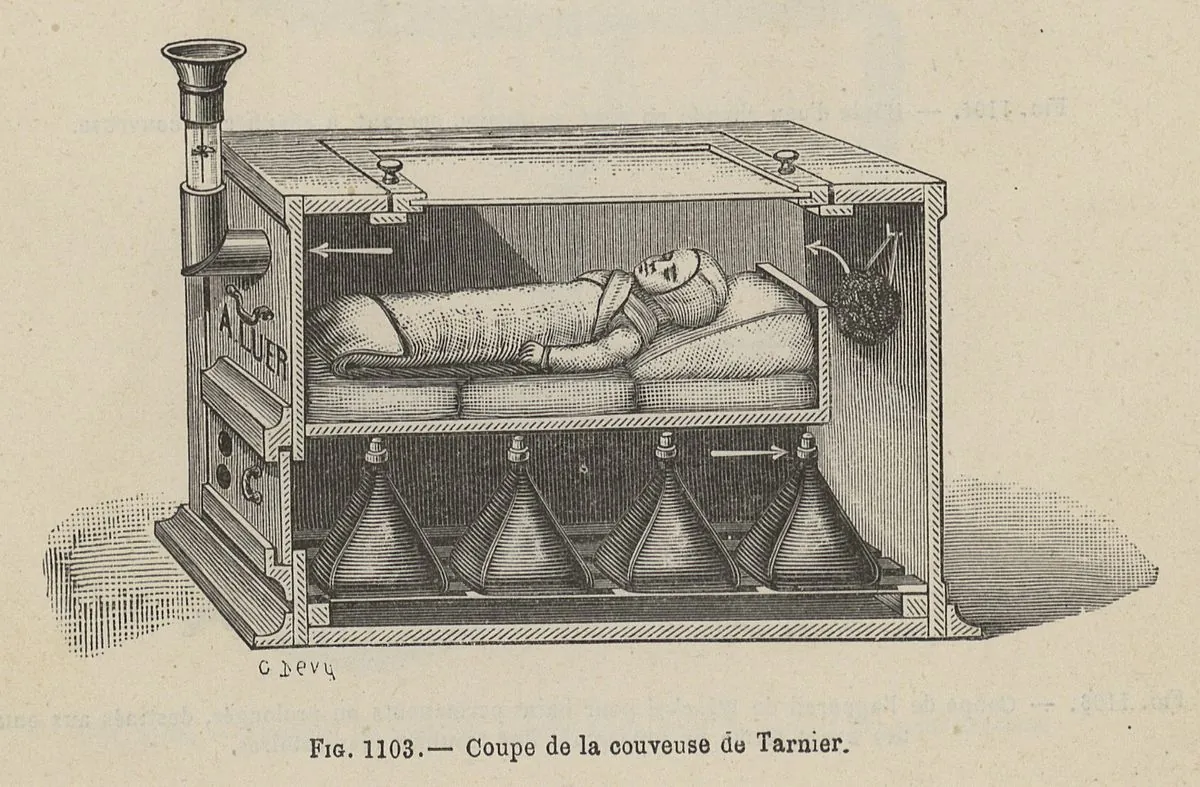
Late in 1898, Béclère took over a department at Saint-Antoine Hospital, which was no more connected to the grid than Tenon.6,8 A small plant on site did produce direct current, but for one purpose only: heating the incubators of the maternity ward.6 He was allowed to divert some of it to his examination room.6 The maternity ward needed it mostly at night; radiology, for fifteen to thirty minutes in the morning.8
What toll did X-rays take on Antoine Béclère?
In 1904, Béclère published a paper on shielding doctors and patients from the harmful effects of the new radiation, in which he recommended protective gloves and goggles.10 The rays left their mark on him too: he later had to have the last two fingers of his left hand amputated.9
What links Antoine Béclère to the French Society of Radiology?
In December 1908, Béclère gathered fellow radiologists at his home on rue La Boétie.4 On December 17, they formed the board of the Société de radiologie médicale de Paris, with Béclère as president.4 He liked to say: "No one can become a good radiologist without first being a good clinician."4 In 1913 the society took the name Société de radiologie médicale de France; today it is the French Society of Radiology (SFR).4
Every year the SFR holds the Journées Francophones de Radiologie (JFR), the French-language radiology congress.4,11 The 2026 edition runs from October 8 to 11 at the Palais des Congrès de Paris, where Milvue presents TechCare Report at booth 1N10.11
Notes
- Guy Pallardy, "La radiologie est entrée avant l'électricité dans les hôpitaux de Paris," Histoire des sciences médicales, vol. 33, no. 4, 1999, p. 333.
- Guy Pallardy, "La radiologie est entrée avant l'électricité dans les hôpitaux de Paris," Histoire des sciences médicales, vol. 33, no. 4, 1999, p. 341.
- AP-HP, "Plan et accès," Antoine-Béclère hospital website, updated September 10, 2026.
- Henri Nahum, "Historique de la SFR," French Society of Radiology website, accessed October 4, 2026 (archived copy: web.archive.org).
- Guy Pallardy, "La radiologie est entrée avant l'électricité dans les hôpitaux de Paris," Histoire des sciences médicales, vol. 33, no. 4, 1999, p. 334.
- Guy Pallardy, "La radiologie est entrée avant l'électricité dans les hôpitaux de Paris," Histoire des sciences médicales, vol. 33, no. 4, 1999, p. 336.
- Antoine Béclère, Les rayons de Röntgen et le diagnostic de la tuberculose, Paris, J.-B. Baillière, 1899, Wellcome Collection scan on archive.org.
- Guy Pallardy, "La radiologie est entrée avant l'électricité dans les hôpitaux de Paris," Histoire des sciences médicales, vol. 33, no. 4, 1999, p. 337.
- Guy Pallardy, "La radiologie est entrée avant l'électricité dans les hôpitaux de Paris," Histoire des sciences médicales, vol. 33, no. 4, 1999, p. 340.
- Panagiotis Sideris, Spyros N. Michaleas, Sofia Voidila, et al., "Antoine Béclère (1856-1939): His Great Contribution to Radiotherapy," Cureus, vol. 16, no. 9, 2024, e68365.
- French Society of Radiology, "JFR 2026," "JFR 2026: informations pratiques," and "JFR 2026: partenaires," jfr.plus; "Plan de l'exposition 2026" (exhibition floor plan), jfrexpo.com; accessed October 4, 2026.
Evaluating fracture-detection AI: the questions to ask
Independent studies, results by region, patient age, clearance, integration, testing on your own cases: a checklist to compare fracture-detection software.
ReadRadiology voice dictation: how to choose speech recognition
Accuracy measured on real dictations, words versus commands, report templates, languages, trial: the criteria that matter when choosing radiology voice dictation.
ReadHow to evaluate a radiology-AI vendor
A framework to judge any imaging AI: independent evidence, the right metrics, real-world deployment, measurements, integration, and regulatory scope.
Read